Wool in Focus · Bedding and Materials
Mattress Protectors Explained: How Wool Layers Manage Moisture
A mattress protector can do more than guard against spills: its materials help determine how a bed feels through the long, uneven hours of the night. Wool offers a distinctive kind of moisture management—not a waterproof barrier, but a breathable fiber that can take up water vapor and release it again. Understanding that difference makes it easier to choose a layer for the job you actually need it to do.
Published October 24, 2026
Mattresses are asked to absorb a remarkable amount of ordinary life. They receive the pressure of bodies, the warmth of sleep, the occasional spill, and the invisible moisture that gathers as people breathe and perspire. A protector is meant to stand between those daily events and the mattress itself. Yet it is also the first layer beneath the sheets, where its fabric and construction can influence the sensation of warmth, airflow, and dampness.
That small distinction—protection on one side, comfort on the other—is where wool enters the discussion. Wool is often described as breathable, moisture-wicking, or temperature-regulating. These phrases can be useful, but they are not interchangeable, and none means that a wool layer will prevent liquid from reaching a mattress. To choose well, it helps to understand what moisture means in a bed, how wool responds to it, and where a natural-fiber layer differs from a waterproof protector.
What a mattress protector is—and what it is not
A mattress protector is generally a relatively thin covering designed to help shield a mattress from dust, abrasion, skin oils, perspiration, and, depending on its construction, liquid spills. The term is sometimes used loosely for mattress pads and toppers, though these have different primary purposes. A pad may add a little cushioning. A topper is usually thicker and is intended to change how a mattress feels. A protector’s central task is preservation.
That task can be approached in several ways. A fitted fabric cover may create a washable barrier against everyday soil without being waterproof. A protector with a waterproof membrane may block liquid, while a cotton or other textile face provides the surface that touches the sheet. Some products combine these functions; others are designed chiefly for softness, breathability, or a modest change in cushioning. The product name alone is not a reliable guide. Construction and care instructions tell the more useful story.
Before buying, ask a practical question: what is the main risk? For a household concerned primarily with spills, incontinence, or frequent accidents, waterproofing may be essential. For someone who wants a more natural-feeling layer and is chiefly concerned with perspiration or routine wear, a breathable, non-waterproof option may be sufficient. These needs can overlap, but they are not identical. A comfortable material cannot compensate for a missing liquid barrier when liquid protection is the priority.
Moisture in sleep is not always a spill
Most moisture in a sleep environment is not dramatic. It arrives gradually as water vapor from the body and breath, then moves through bedding—or lingers within it—depending on the materials, room conditions, and how much air can circulate. A sleeper may describe the result as clammy, hot, or simply uncomfortable without ever encountering a visible patch of moisture. The sensation is real, but it does not necessarily mean that the mattress needs a waterproof shell.
Textiles respond differently to water vapor. Some fibers take up moisture within their structure; some allow vapor and air to move through the fabric; some are coated or laminated to resist liquid. These properties can coexist in a single product, but they can also be in tension. A continuous waterproof membrane is designed to stop liquid. Depending on its design, it may allow some water vapor to pass, but it is not the same as an open, uncoated textile surface. The balance between protection and ventilation is a matter of materials and construction, not a simple contest between “natural” and “synthetic.”
How wool manages moisture
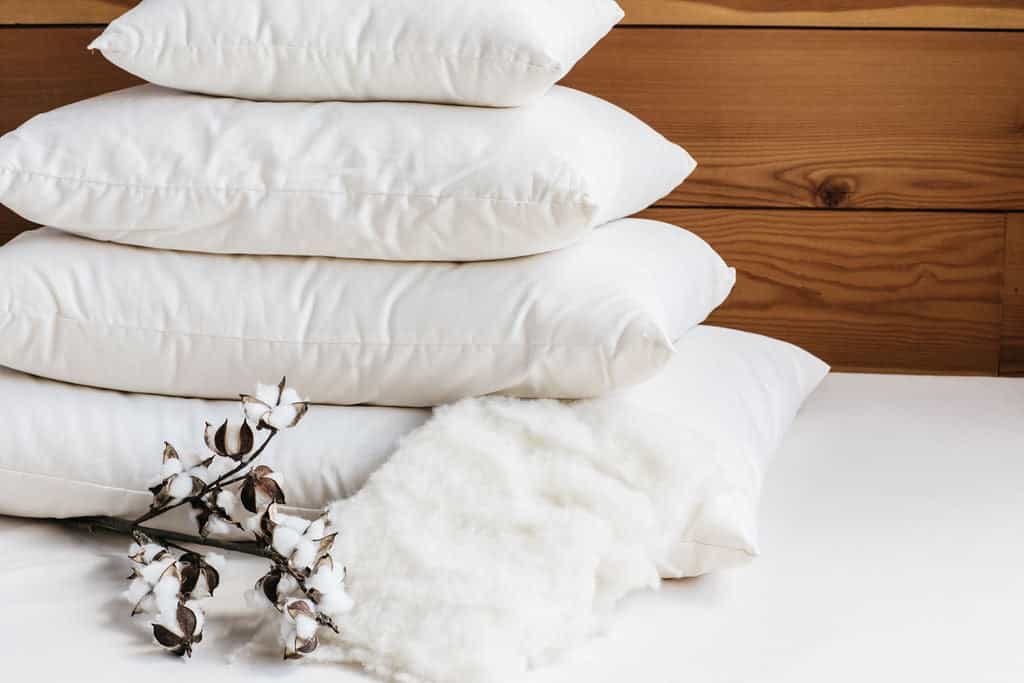
Wool fibers have a layered structure that lets them interact with moisture vapor. They can absorb water vapor into the fiber and later release it as surrounding conditions change. In bedding, this ability can help moderate the small fluctuations in humidity around the body. Wool also forms a resilient, airy layer when processed into batting or woven cloth; the spaces among fibers can hold still air, which contributes to insulation while allowing a textile to feel less sealed than an impermeable covering.
It is tempting to turn this into a promise that wool keeps every sleeper cool and dry. That would be too sweeping. Wool does not cancel perspiration, control a room’s humidity, or guarantee a particular body temperature. How a layer feels depends on its weight, density, shell fabric, quilting, the other bedding above it, and the climate of the room. A thick wool layer under a heavy comforter may feel quite different from a thin wool-filled pad beneath a light sheet. Individual sleep habits matter, too.
The useful idea is more modest: wool can buffer moisture vapor and contribute to a breathable bedding system. When a sleeper warms and the surrounding air holds more moisture, wool may take up some of that vapor; when conditions shift, it can release moisture back toward the surrounding air. It is a dynamic exchange, not disposal. The room still needs reasonable ventilation, and bedding still needs airing and cleaning according to its care requirements.
Wool’s performance also depends on its preparation and the product’s design. A lofty wool batting, a tightly woven wool fabric, and a wool filling sealed inside a dense shell are not identical materials in use. Cotton covers, quilting patterns, fill distribution, and finishing treatments all influence how the complete layer behaves. Reading a label for the fiber alone gives only part of the picture.
Wool, waterproof fabrics, and cotton: different answers to different questions
A comparison is most useful when it begins with purpose rather than a ranking. Wool is a candidate for moisture buffering and natural-feeling breathability. Waterproof protectors are designed to stop liquid. Cotton protectors can offer a familiar, washable textile surface, though ordinary cotton fabric alone is not waterproof. Each answers a different version of the question, “What do I need this layer to do?”
- Wool layers: Often chosen for warmth, resilience, and the ability to absorb and release water vapor. Unless a product specifically includes a waterproof barrier, it should not be treated as spillproof.
- Waterproof protectors: Better suited to liquid protection. Their backing or membrane may change the feel of the surface, and laundering requirements vary. Look for clear information about the barrier, wash temperature, and drying method.
- Cotton protectors: Can provide a washable, breathable fabric layer and help with routine soil. Cotton is absorbent, but a plain cotton cover does not prevent liquid from passing through to the mattress.
Some protectors combine a natural-fiber face with a waterproof backing. Such designs can offer a softer surface and liquid resistance, but their performance depends on the membrane and the product’s construction. “Breathable waterproof” is not a contradiction: some membranes are designed to resist liquid while allowing water vapor to move through to a degree. It is, however, a claim worth checking against product specifications rather than assuming from a marketing phrase.
Wool has another limitation that is worth stating plainly: it can absorb moisture, but absorption is not the same as protection. A significant spill may saturate a wool layer and continue through it. If safeguarding a mattress against accidents is important, use a product explicitly designed and tested for that purpose. A wool layer may still be part of the bedding arrangement, but it should not be asked to perform a job it was not made to do.
Choosing a layer: a short list of sensible questions
Start with the mattress and the household, not with a fiber’s reputation. A guest bed used occasionally, a child’s bed, and the bed of a person who often spills a drink all have different protection needs. Then consider whether the goal is to preserve the mattress, soften a firm surface, reduce a clammy sensation, or address several concerns at once. A protector, pad, and topper may look similar in a catalogue, but their jobs can diverge.
- How much liquid protection is necessary? If the answer is substantial, choose a clearly identified waterproof protector and follow its care label.
- Is the main complaint temperature or surface feel? A breathable wool-containing layer may be worth considering, especially when the desired effect is a less sealed, more forgiving surface.
- What is the full construction? Check the face fabric, fill, backing, quilting, and whether the item contains a membrane or treatment.
- Will it fit securely? Check mattress depth, elastic or skirt design, and whether the protector is intended for the mattress size and profile.
- Can it be cared for realistically? A layer that needs spot cleaning or professional cleaning may be a poor match for a household that needs frequent machine washing.
Fit deserves more attention than it usually gets. A protector that shifts, bunches, or pulls away at the corners can become irritating and may expose parts of the mattress. Deep mattresses and mattresses with adjustable bases call for particular care: confirm pocket depth and compatibility rather than trusting a generic “universal fit” description. A fitted protector should lie smoothly without being stretched beyond its intended range.
Care: the unglamorous half of performance
Wool is often better served by restrained care than by frequent washing. Depending on construction, a wool-filled protector or pad may be suitable only for spot cleaning and airing; another product may be washable under carefully specified conditions. There is no universal wool-care rule that overrides the manufacturer’s instructions. Excessive agitation, heat, or improper drying can shrink, felt, distort, or clump wool batting. A label that says “washable” should be read in full: cycle, temperature, detergent, and drying method all matter.
Waterproof protectors have their own requirements. High heat, harsh chemicals, or an unsuitable dryer setting can damage some membranes or coatings. A protector that no longer lies flat, has a cracked backing, or allows water through may no longer provide dependable protection. Cotton covers and removable cases may be easier to launder, but they too should be washed according to their construction and finish.
Routine airing can help bedding feel fresher, but it is not a substitute for laundering when something is soiled. Keep the room reasonably ventilated, use sheets that suit the climate, and avoid layering more insulation than the sleeper needs. The microclimate of a bed is a small system: changing the comforter or room conditions can matter as much as changing the protector.
Natural does not automatically mean hypoallergenic
Wool is sometimes promoted as hypoallergenic or resistant to common bedding problems. Such descriptions require care. People vary in their sensitivities, and a natural fiber can still irritate an individual. A wool layer may also carry a characteristic odor when new, and some products require specific handling. Anyone with known allergies or a history of skin reactions should review the material details and, where appropriate, seek advice from a qualified health professional.
Likewise, no protector alone can promise a healthier sleep environment. Cleanliness, humidity, ventilation, laundering habits, and the condition of the mattress all play a part. Certifications can help establish that a product meets particular standards for materials or processing, but they should be understood in context: a certification does not tell you whether an item is waterproof, how it will feel, or whether it is suitable for a specific sleeper. Check what the certification covers.
The right layer is the one that performs its actual job
The phrase “moisture management” can sound like a technical solution to an intimate, ordinary discomfort. In practice, it describes a set of material behaviors: taking up vapor, releasing it, permitting air movement, or blocking liquid. Wool is interesting because it can contribute to the first two while remaining part of a breathable textile layer. Its value is not that it makes a bed impervious to moisture, but that it can help shape how vapor and warmth are experienced around the sleeper.
For someone whose priority is spill protection, a waterproof mattress protector is the more direct answer. For someone seeking a natural-feeling layer that can buffer everyday moisture vapor, wool may be a thoughtful choice—provided the product’s construction and care requirements suit the household. Cotton offers another familiar option, particularly where a washable fabric surface is the main concern. None is universally best; the right decision follows from the problem at hand.
A mattress protector is a quiet object. When it works, it disappears beneath the sheet and goes largely unremarked. But the choice is not trivial: it affects how the mattress is preserved and how the bed meets the body night after night. Wool’s contribution is subtle rather than miraculous—a capacity to interact with moisture, a springy structure that can hold air, and a character that differs from the sealed certainty of a waterproof barrier. Knowing those distinctions is enough to make the choice less mysterious, and the bed a little more deliberate.