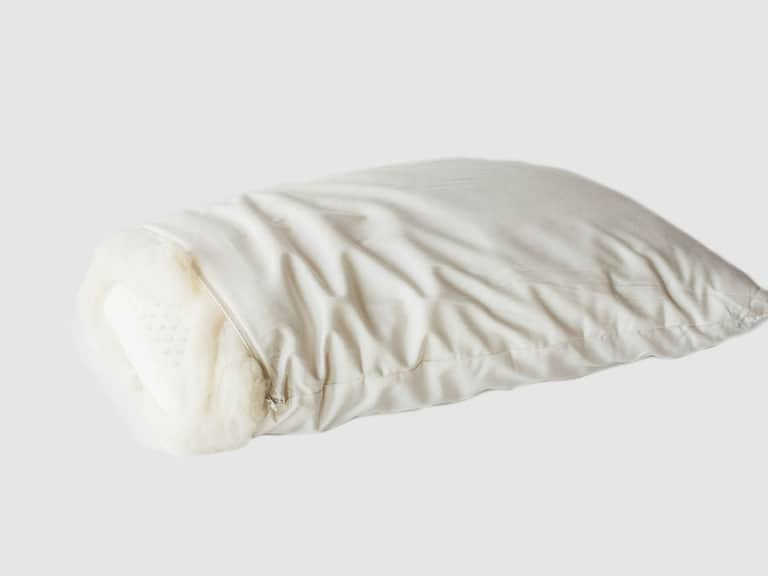
Latex bedding is valued for its resilient support, breathable structure, and ability to retain its shape with regular use. In pillows and mattresses, latex responds to pressure while helping maintain a balanced sleeping surface. These characteristics make latex relevant to people learning about supportive bedding materials and comparing options for different sleep preferences.
Natural latex is produced from rubber tree sap and formed into a springy material with a distinctive, responsive feel. Its open-cell structure and ventilation channels, when present, can encourage airflow through a pillow or mattress. Latex products are often considered alongside organic mattresses, wool bedding, and other materials selected for comfort and temperature management.
The Latex & Wool Pillow combines latex support with wool’s natural cushioning and moisture-regulating properties. This pairing can provide a supportive yet yielding surface for the head and neck, while wool helps manage humidity near the sleeper. Pillow construction, fill amount, and loft influence how the product feels and whether it suits particular sleeping positions.
The Natural Wool-Wrapped Latex Bed Pillow surrounds a latex core with wool, integrating two materials with distinct functions. Latex offers resilient support that adapts to pressure, while the wool wrapping adds a softer layer and can help moderate warmth and moisture. These features make the pillow a useful example of layered natural-material bedding.
When assessing latex pillows, consider firmness, loft, core design, and the surrounding cover or fiber layers. People who sleep on their side, back, or stomach may prefer different heights and levels of support. Comparing these details with other bedding, including pillows and comforters, can clarify how materials contribute to sleep comfort and care needs.
 Bedding